HOA and Condo Water Damage Restoration in Laguna Hills & Orange County
HOA and condo water damage restoration means drying and rebuilding homes that share walls, floors and plumbing, while keeping a separate record for each unit. PCH Restoration Team (PCH) traces where the water went, documents every affected unit for owners, the board, the property manager and the insurers, and rebuilds under CSLB #935386.
Who should you call first after a leak in a condo or HOA building?
Make everyone safe and stop the water first. Then call your property manager or the association's emergency line, call PCH at 949-617-1111, and contact your own insurer. The order matters less than making all of those calls the same day.
- Safety first. Call 911 if water is near wiring or the electrical panel, a ceiling is sagging or falling, or you smell gas. Keep everyone out of those rooms.
- Stop the water. Close the shut-off valve under the fixture or the main valve for your unit if you can reach it. If the leak is in a shared line or another unit, maintenance or the manager may need to shut it off at the building.
- Warn the neighbours. Knock on the door below and beside you. Water in a stacked building often reaches them before anyone notices.
- Call the property manager or the association. They can reach other units, building shut-offs and the board, and they keep the association's own record of the event.
- Call PCH, 24/7. We start extraction, moisture readings and photographs before materials are disturbed.
- Contact your insurer. Tell your own carrier what happened. The manager or board decides whether the association involves its own carrier.
How does PCH trace a leak across stacked and shared-wall units?
We follow the moisture, not the unit lines. We take readings through shared walls, ceilings and floors into the units around the one that reported water, including units that look dry, and record where we found water and the path it took.
Water in an attached building moves through the structure: down a shared plumbing stack (the vertical drain and supply lines that serve units stacked above one another), along the bottom plate of a shared wall, or through a ceiling into the unit below. A moisture meter, a handheld tool that reads how much water a material holds, and a thermal imaging camera show where it went behind finished surfaces.
That is why we ask for access to neighbouring units even when the owners report no damage. Water can sit inside a wall for some time before it stains the paint. We photograph what we find before anything is cut or removed, so the record shows the building as it was.
We record facts: where water was found, readings by location, and which assemblies were wet. We do not decide fault. If a plumber is needed to find or repair the source, that is the plumber's job; PCH does not repair plumbing.
Why does each condo unit need its own readings and photos?
Each unit may have a different owner, a different insurer and a different adjuster. A separate record for each unit lets every party see exactly what happened in the space they care about, without sorting through the whole building's file.
- Readings by location: unit, room and wall, taken on the first visit and every day of drying.
- Photographs by location: labelled the same way, taken before removal, during drying and before rebuild.
- What was removed and why: drywall, baseboard, flooring or insulation, listed per unit.
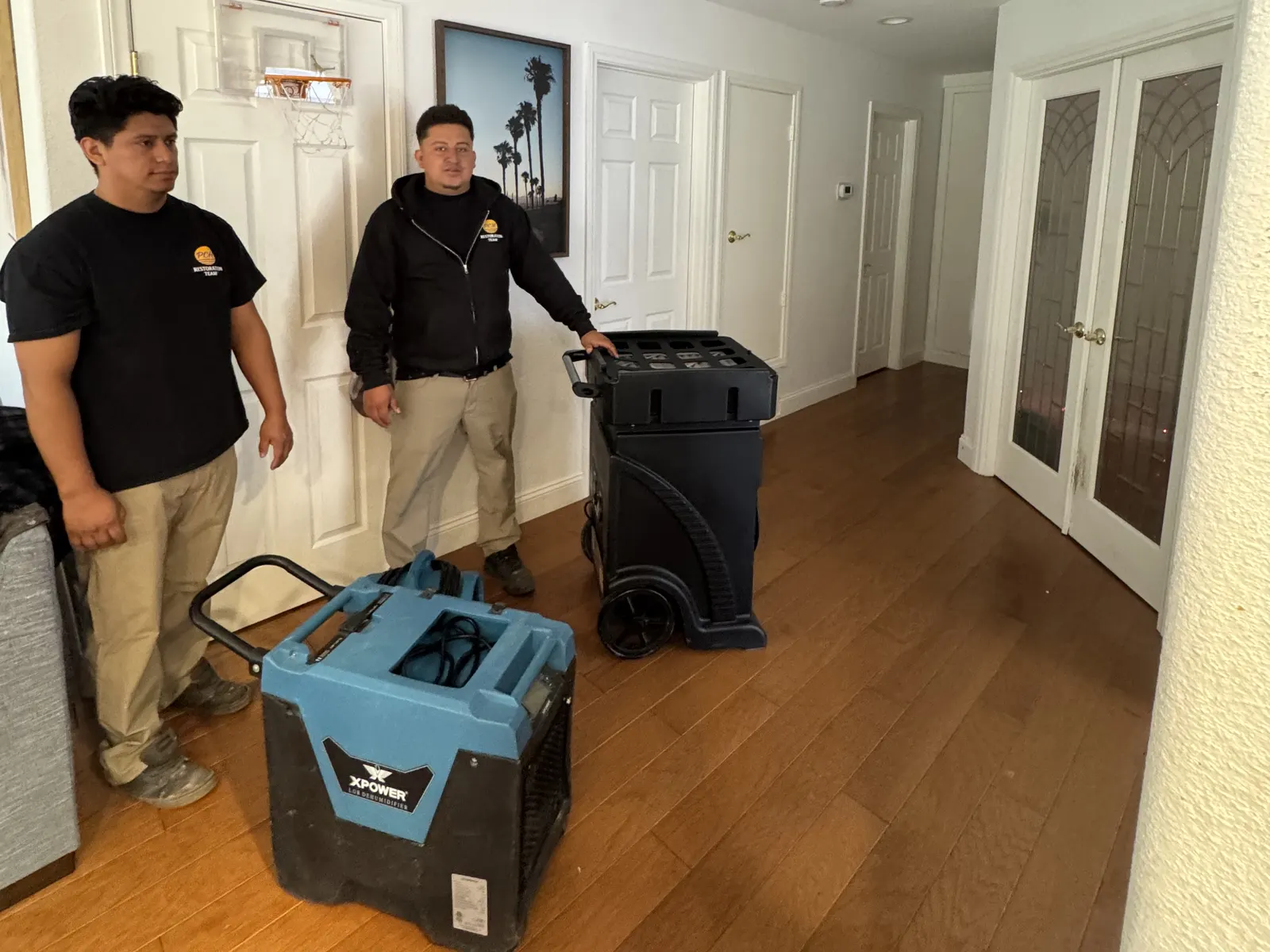
- Equipment by unit: which dehumidifiers and air movers ran in each space, and for how long.
- Drying goal per material: the reading each wet material has to reach before it is called dry.
The record for a common area such as a corridor, stairwell or shared ceiling is kept separate too. Owners can forward their own section to their carrier, and the board receives the full set.
Who does PCH coordinate with on an HOA water loss?
We work with the affected owners and residents, the community association manager, the board, building maintenance, the plumber, and the adjusters for the master policy and each HO-6 policy. Each one gets the information they need, from one source.
| Who | What they usually need from PCH |
|---|---|
| Unit owners and residents | What is happening in their home, when crews will be there, and their own unit's record |
| Community association manager | Access plans, schedules, a single contact and progress updates |
| Board of directors | A clear report they can review at a meeting and keep with their records |
| Master policy adjuster | Common-area and building records, readings and photographs |
| HO-6 adjusters | The record for the unit they are handling |
| Plumber or building maintenance | Where our readings show the water came from and spread |
A community association manager is the professional the board hires to run the association day to day; in many buildings that is a property management company. Offices, retail and mixed-use buildings follow the same approach, covered on our commercial water damage restoration page.
What does the HOA board or property manager receive from PCH?
A written report with a section for each affected unit and common area: where water was found, the path it took, the materials affected, readings, photographs, what was removed, and the drying log. It is written so the board can circulate it without editing.
Through the drying, the manager gets regular updates on each unit's readings and on when equipment can come out of each space. Equipment leaves a unit when that unit meets its drying goal, not when the whole building does. Our structural drying page shows what the drying log records and why it matters to a claim.
When drying finishes, the report includes the rebuild scope for each unit and each common area, so the board and owners can see what is proposed before approving it.
Can residents stay in their condos while the building dries?
Usually, yes. Most residents stay home while drying equipment runs. Moving out is worth considering when the kitchen or only bathroom is out of use, when the water was contaminated, or when a resident has a health condition.
- Work windows agreed in advance with the manager, so residents know when crews and noise will be in the building.
- Corridors and lifts protected before wet material is carried out.
- Containment around removal areas to keep dust out of lived-in rooms.
- Equipment runs day and night. Switching it off for quiet slows the drying and adds days, so we place it to disturb residents as little as we can.
- Keys and access arranged through the manager for owners who are away.
Standing water or water from a sewer line is a different job, with removal of more material and stricter containment. Our crews explain what each resident can expect before work starts in their unit.
How does an HOA rebuild work when the association has to approve it?
We prepare a rebuild scope for each unit and common area, submit what the association needs for its approval process, and start once approvals are in place. PCH is a California licensed general contractor, so the team that dried the building also rebuilds it.
Many associations have an architectural or alteration request process for work inside units and in common areas. We supply the scope, materials and schedule that process asks for, and we match finishes in corridors and shared spaces so they look consistent across units. Permits are pulled where the work requires them. Our reconstruction and build-back page covers finish matching, permits and scheduling.
PCH Restoration Team is an IICRC Certified Firm, licensed under CSLB #935386, and has served Orange County since 2009. The team you call is the team that does the work.
What is different about water damage in Laguna Woods Village?
Laguna Woods Village homes, called manors, sit within housing mutuals, and the Village runs its own Manor Alterations and Maintenance and Construction services. After a leak there, ask your mutual how it wants outside contractors coordinated before work starts.
Construction of Laguna Woods Village began in 1963 and its first residents arrived in 1964, so many of its attached buildings have been carrying water lines for decades. Its housing is organised into mutuals, including Third Laguna Hills Mutual, United Laguna Woods Mutual and The Towers, with the Golden Rain Foundation managing common amenities. In attached manors like these, water from one home can reach the ones beside and below it.
Our page on HOA water damage in Laguna Woods covers the Village in more detail, and our water damage restoration in Laguna Woods page covers the rest of the city.
What should an HOA board do in the first days after a water loss?
Confirm the source is stopped, make sure every possibly affected unit has been checked, keep one point of contact with the restoration contractor, and ask for per-unit documentation from the start. Decisions about responsibility can follow once the facts are recorded.
- Confirm the water is off and a plumber has found or repaired the source.
- Ask the manager to arrange access to units above, below and beside the one that reported water.
- Name one contact person for the restoration contractor.
- Ask for readings and photographs by unit and by common area from the first visit.
- Keep owners informed in writing about schedules and access.
- Take questions about responsibility and coverage to your manager, your CC&Rs and, where needed, an attorney.
HOA and Condo Water Damage Questions
Why do you need to get into units that show no damage?
Water travels inside walls, floors and ceilings before it shows on the surface. Taking readings in neighbouring units on the first visit shows how far it spread, gives those owners a starting record, and helps catch wet materials early. The US EPA advises drying water-damaged areas within 24 to 48 hours to prevent mold growth.
Will PCH talk to my HO-6 adjuster?
Yes, with your permission. We share the record for your unit with your adjuster: readings by location, photographs before and after removal, what was removed and the drying log. We describe what we found and what we did. Coverage depends on your policy and your carrier's determination, so questions about it go to your carrier.
How long does drying take in a multi-unit building?
Three to five days is typical for drywall and framing in a clean-water loss. Concrete, hardwood and sealed cavities take longer. Each unit is tracked on its own, and equipment leaves a unit when that unit reaches its drying goal, so some units finish before others.
What if the owner of the unit above is away?
Ask your property manager or the association's maintenance team to shut off the water and arrange access to that unit. We can start drying and documenting your unit straight away, and we document the unit above once access is arranged. Call 949-617-1111, 24/7, so drying can start while access is being sorted out.
Can mold grow inside shared walls after a leak?
It can, because a shared wall cavity stays wet longer than an open surface and nobody sees inside it. That is why we take readings on both sides of the wall and open the cavity when readings call for it. If growth is found, we contain and remove it before the wall is closed.
Water or Mold Damage Right Now?
The team you call is the team that does the work: drying, mold remediation and licensed rebuild.